
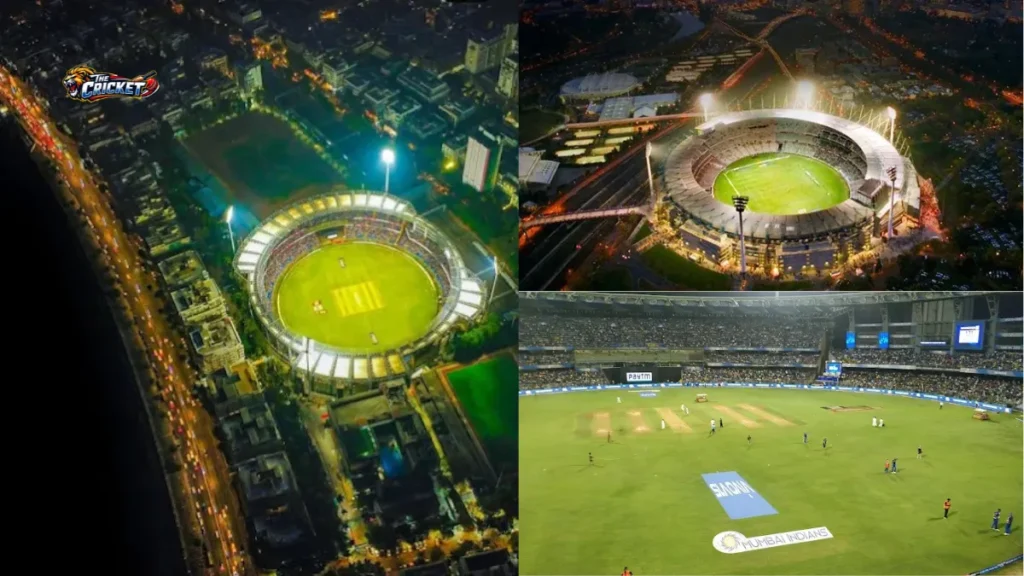
Established: 1974
Seating Capacity: 32,000
End Names: Garware Pavilion End, Tata End
Floodlights: Yes
Home Team: Mumbai
Pitch Type: Grass with red-soil base
Current Local Time (Mumbai): 01:25, Thu, Feb 26, 2026
The wankhede stadium pitch report is among the most searched cricket topics whenever a major match is scheduled in Mumbai. From high-voltage IPL clashes to historic Test matches and World Cup finals, this iconic ground has consistently delivered drama, big scores, and unforgettable performances.
Situated near Marine Drive in South Mumbai, Wankhede Stadium is often described as the heartbeat of Indian cricket. It may not be the largest cricket venue in the country, but its atmosphere, history, and pitch behavior make it one of the most influential grounds in world cricket.
This in-depth 2000+ word report covers everything-pitch nature, average scores, format-wise analysis (Test, ODI, T20), weather impact, toss factor, historical records, fantasy cricket strategy, and expert match insights.
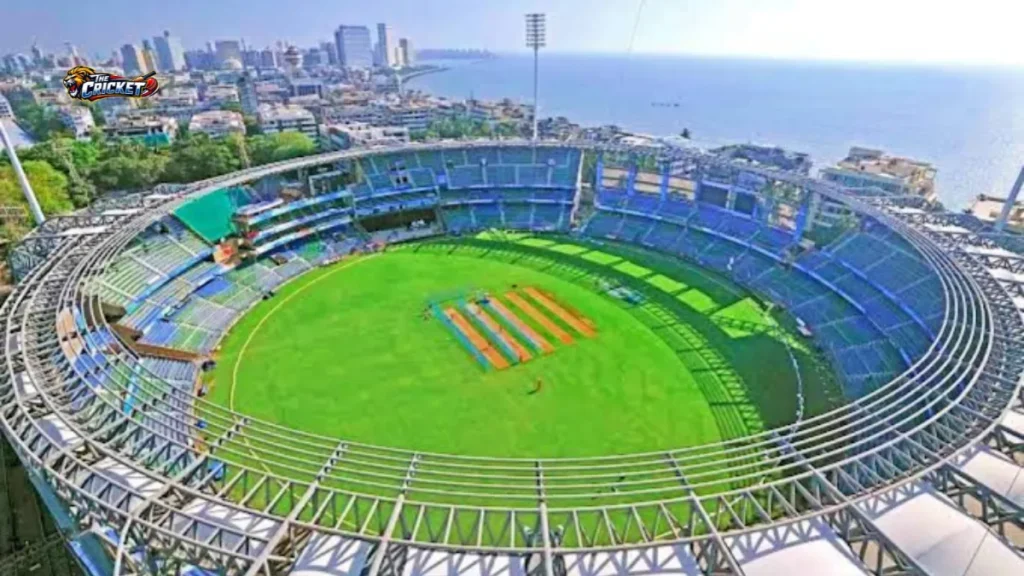
History of Wankhede Stadium: How It All Began
Mumbai, long regarded as India’s cricket capital, has hosted Test cricket at three major venues over time.
- The historic Bombay Gymkhana hosted India’s first-ever Test match in 1933–34 against England.
- After World War II, the Brabourne Stadium became the primary international venue and staged 17 Test matches.
- Due to administrative disagreements between the Cricket Club of India and the Bombay Cricket Association, a new stadium was built — and thus, Wankhede Stadium was born in 1974.
The stadium hosted its first Test match during the 1974–75 season when the West Indies toured India. West Indies captain Clive Lloyd scored a magnificent unbeaten 242, and India lost the match by 201 runs in what was Mansur Ali Khan Pataudi’s final Test appearance.
Over the decades, Wankhede has been home to legendary performances, historic victories, and emotional moments — including India’s 2011 Cricket World Cup triumph.
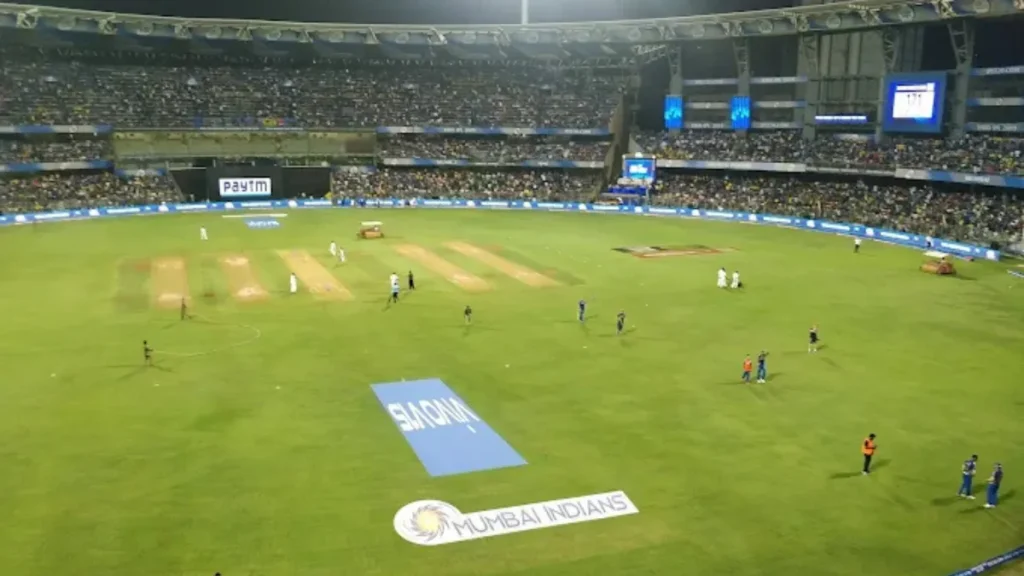
Wankhede Stadium: Key Venue Facts
| Detail | Information |
|---|---|
| Location | South Mumbai, Maharashtra, India |
| Established | 1974 |
| Seating Capacity | 32,000 |
| Pitch Surface | Grass with red-soil base |
| Ends | Garware Pavilion End, Tata End |
| Floodlights | Installed |
| Home Association | Mumbai Cricket Association |
| Boundary Size | Relatively short (square boundaries shorter than straight) |
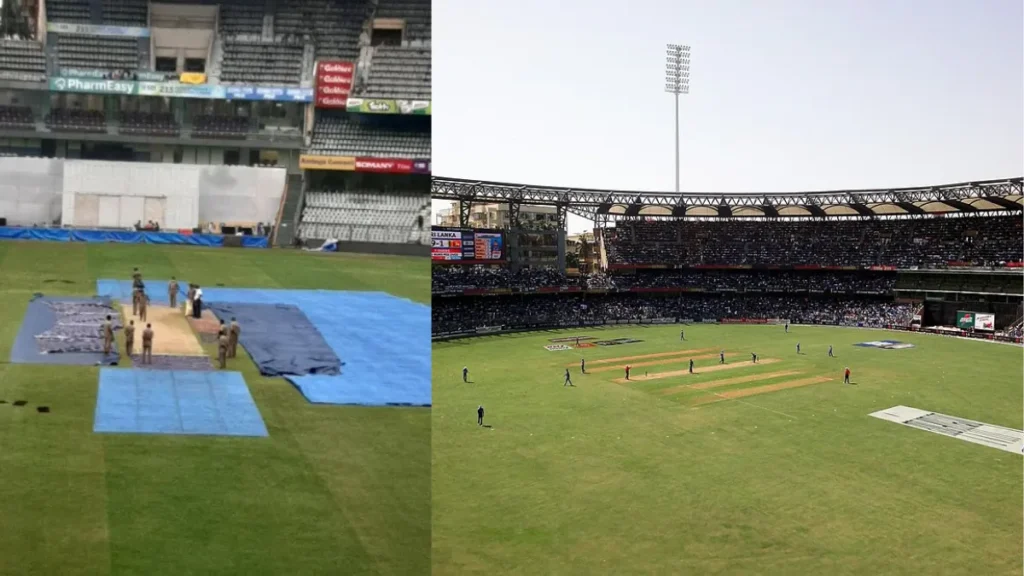
Wankhede Stadium Pitch Report: Surface Overview
The wankhede stadium pitch report consistently highlights one major feature — balance with a batting edge.
1. Pitch Composition
The surface is made primarily from red soil, which naturally offers:
- Good bounce
- Carry for fast bowlers
- Stroke-friendly conditions
- Assistance for spinners late in longer matches
Unlike slower Indian surfaces, Wankhede offers true pace. Batsmen trust the bounce and play through the line with confidence.
Bounce and Pace Analysis
One of the defining characteristics of the wankhede stadium pitch report is the reliable bounce.
- New-ball bowlers get seam movement early.
- Ball comes nicely onto the bat.
- Stroke play becomes easier once batsmen settle.
In white-ball formats, the pitch rarely deteriorates drastically. This consistency makes chasing targets more predictable.
Fast bowlers who hit hard lengths can extract movement in the first 6–8 overs. However, once the ball loses shine, it becomes a batting paradise.
Spin Factor at Wankhede
Contrary to traditional Indian pitches, Wankhede is not heavily spin-dominated.
In White-Ball Cricket:
- Spinners rely on variations rather than sharp turn.
- Wrist spinners tend to perform better than finger spinners.
- Defensive spin bowling is often expensive due to short boundaries.
In Test Matches:
- From Day 3 onwards, cracks may appear.
- Red soil assists turn gradually.
- Uneven bounce may emerge late in the game.
Wankhede Stadium Pitch Report for T20 Matches
T20 cricket at Wankhede is synonymous with big scores.
T20 International & IPL Data Overview
| Parameter | Average |
|---|---|
| Average 1st Innings Score | 170–190 |
| Winning Trend | Teams chasing slightly ahead |
| Highest T20 Totals | 200+ common in IPL |
| Powerplay Average | 45–55 runs |
Why High Scores Are Common
- Short square boundaries
- Fast outfield
- Even bounce
- Dew factor in night matches
Toss Factor in T20s
Captains winning the toss usually choose to bowl first because:
- Evening dew makes gripping difficult.
- Ball skids onto the bat in second innings.
- Defending totals becomes harder.
Death bowling at Wankhede is extremely challenging. Yorkers and slower deliveries are essential.
Wankhede Stadium Pitch Report for ODI Matches
In One Day Internationals, the pitch offers a balanced contest.
| ODI Parameter | Data Range |
|---|---|
| Average 1st Innings Score | 260–300 |
| Competitive Total | 280+ |
| Lowest Defendable Total | 250 (depending on conditions) |
| Chase Success Rate | Slightly higher |
Match Pattern in ODIs
- Early swing under lights.
- Middle overs favor batsmen.
- Dew makes chasing easier.
- Quick outfield helps boundary conversion.
Teams prefer chasing in day-night games.
Wankhede Stadium Pitch Report for Test Matches
Test matches at Wankhede follow a classic subcontinental pattern with a twist.
Day-wise Behavior
| Day | Pitch Nature |
|---|---|
| Day 1 | Good for batting, slight seam |
| Day 2 | Best batting conditions |
| Day 3 | Spin begins to assist |
| Day 4 | Turn increases |
| Day 5 | Uneven bounce, match result likely |
The stadium rarely produces draws because the surface gradually breaks down.
Memorable Performances at Wankhede Stadium
This venue has witnessed iconic innings and unforgettable cricket moments.
- Sunil Gavaskar scored 205 against West Indies (1978–79).
- Alvin Kallicharan smashed 187 in the same series.
- Ian Botham’s century and 13 wickets in the 1980 Jubilee Test.
- Vinod Kambli’s 224 vs England (1992–93).
- Ravi Shastri’s six sixes in an over (1984–85, domestic cricket).
- India’s 2011 Cricket World Cup final victory.
The stadium stands are named after Mumbai cricket legends, including Vijay Merchant, Sunil Gavaskar, and Sachin Tendulkar.
Impact of Coastal Conditions and Sea Breeze
Wankhede’s proximity to the Arabian Sea historically allowed sea breeze to assist swing bowlers during morning and evening sessions.
However, after renovations before the 2011 World Cup, structural changes reduced direct wind flow effects.
Still, humidity remains a significant factor.
Dew Factor: Match Decider in White-Ball Cricket
The wankhede stadium pitch report often revolves around dew in night matches.
Effects include:
- Reduced grip for spinners.
- Skidding deliveries.
- Increased scoring rate.
- Difficulty defending totals.
Captains factor dew heavily into toss decisions.
Ideal Team Combination at Wankhede
Batting Strategy:
- Strong top order essential.
- Aggressive openers beneficial.
- Finishers crucial due to small boundaries.
Bowling Strategy:
- Two quality new-ball pacers.
- Death-over specialists.
- One attacking wrist spinner.
- All-rounders add flexibility.
Fantasy Cricket Tips Based on Wankhede Stadium Pitch Report
For fantasy players:
Pick top-order batsmen.
Choose pacers bowling powerplay + death overs.
Select attacking all-rounders.
Avoid too many defensive spinners.
Captain and vice-captain choices should favor aggressive batsmen.
Average Scores Summary (All Formats)
| Format | Average 1st Innings | Highest Known Trend | Match Nature |
|---|---|---|---|
| T20 | 170–190 | 200+ frequent | High scoring |
| ODI | 260–300 | 330+ possible | Balanced |
| Test | 350+ (1st Innings) | 500+ rare but possible | Result-oriented |
Also read: Wankhede Stadium Weather: Guide for Cricket Fans and Visitors
Why Wankhede Stadium Remains Globally Important
Globally, cricket analysts consider Wankhede one of the fairest batting surfaces in Asia. Unlike extremely slow tracks, it rewards skillful pace bowling and aggressive batting equally.
The stadium has hosted:
- ICC World Cup matches
- IPL finals
- Historic Test series deciders
- Domestic Ranji Trophy classics
Its global relevance continues to grow with franchise cricket expansion.
Also read: Wankhede Stadium: Mumbai’s Iconic Cricket Cathedral with a Rich Legacy
Final Expert Verdict: Wankhede Stadium Pitch Report 2026
The updated wankhede stadium pitch report confirms that this venue remains:
- Batting-friendly in limited-overs cricket
- Competitive in ODIs
- Progressive and result-oriented in Tests
Fast bowlers get early movement.
Spinners gain help later in Tests.
Dew influences night matches.
Chasing remains slightly advantageous.
Teams with deep batting line-ups and smart death bowlers typically succeed here.
Whenever analyzing a match in Mumbai, reviewing the latest wankhede stadium pitch report, weather conditions, and toss outcome is essential for accurate match prediction.
Wankhede Stadium is not just a cricket ground-it is an institution. From legendary innings to World Cup glory, it continues to shape cricket history. And as long as the game thrives, the pitch at Wankhede will remain one of the most talked-about surfaces in world cricket.