
The Narendra Modi Stadium pitch report is one of the most searched topics in world cricket every time an international fixture or IPL clash is scheduled in Ahmedabad. Fantasy cricket players, analysts, broadcasters, and fans across India, the UK, and the United States closely study this surface before making predictions.
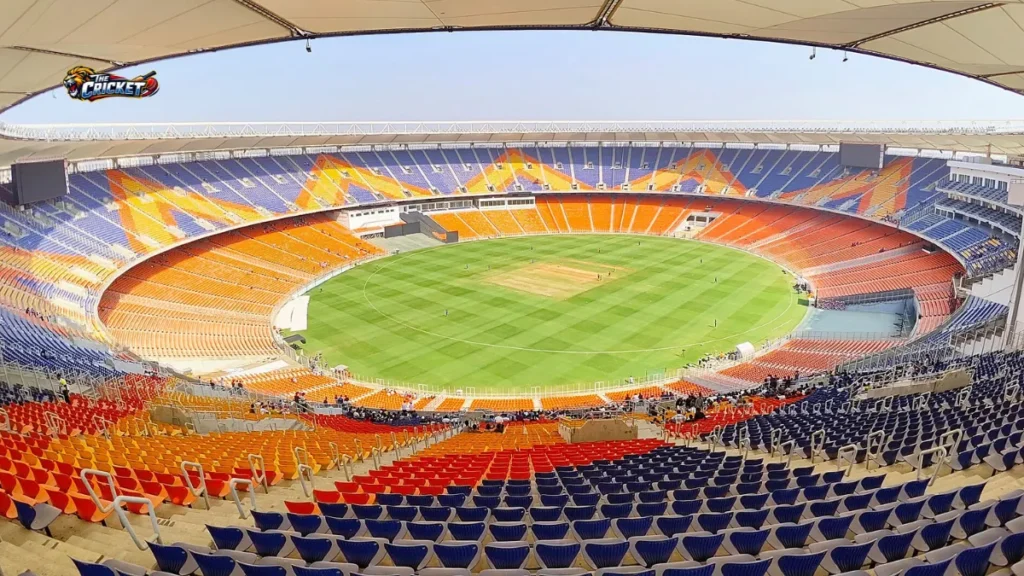
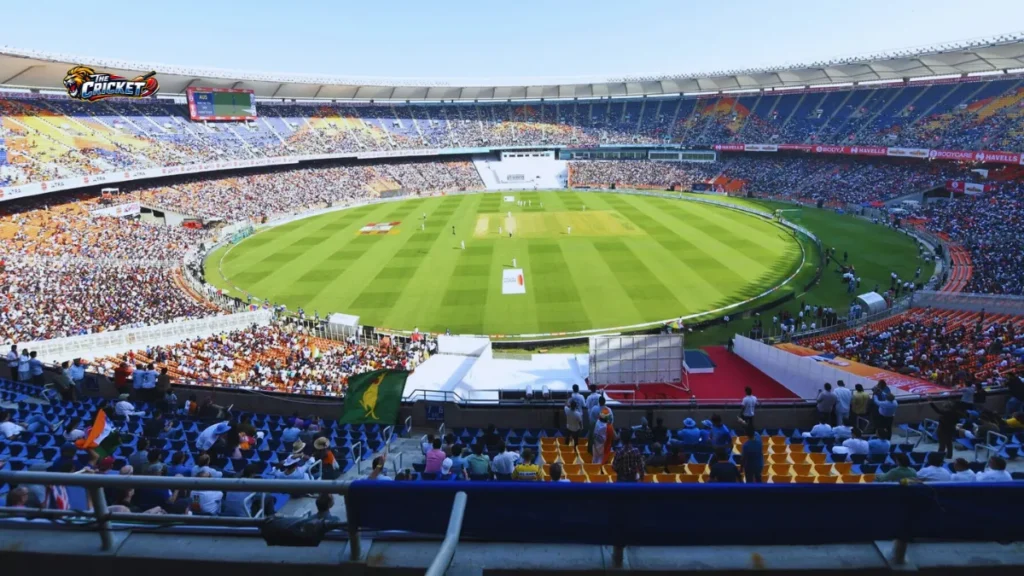
Located in Ahmedabad, Gujarat, this iconic venue is not just another cricket ground-it is the largest cricket stadium in the world by seating capacity. Over the years, it has hosted historic Test matches, high-scoring ODIs, thrilling T20 encounters, and globally watched ICC tournament games.
In this comprehensive 2000+ word news-style guide, we break down everything you need to know about the Narendra Modi Stadium pitch report, including soil type, batting conditions, bowling assistance, toss factor, weather influence, format-wise analysis, statistical trends, and venue history.
Stadium Overview: Key Facts and Infrastructure
Before diving into the pitch behaviour, it is important to understand the stadium’s background.
The venue was previously known as the Sardar Patel Stadium and is also commonly referred to as the Motera Stadium due to its location in the Motera area of Ahmedabad.
Stadium Profile
| Detail | Information |
|---|---|
| Official Name | Narendra Modi Stadium |
| Former Names | Gujarat Stadium, Sardar Patel Stadium |
| Established | 1982 (Renovated and reopened in 2020) |
| Seating Capacity | 132,000 |
| Location | Ahmedabad, Gujarat, India |
| End Names | Adani Pavilion End, Jio End |
| Floodlights | Yes |
| Home Team | Gujarat (Domestic & IPL Franchise) |
| Curator | Bagira Thakur |
Built along the banks of the Sabarmati River, the original structure was completed remarkably within nine months on land provided by the Gujarat state government. The venue underwent a major renovation ahead of the 2006 Champions Trophy, where new pitches, an upgraded outfield, floodlights, and covered stands were introduced.
The stadium was completely redeveloped and reopened in 2020 with world-class facilities, expanded seating capacity, and upgraded infrastructure.
Historic Moments at the Venue
The stadium has witnessed several landmark achievements in cricket history.
- Sunil Gavaskar became the first batter in Test cricket history to reach 10,000 runs here during a series against Pakistan in 1986-87.
- Kapil Dev surpassed Richard Hadlee’s record of 431 Test wickets at this venue in 1994, becoming the leading wicket-taker in Test cricket at the time.
- South Africa famously bowled India out for 76 in a 2008 Test match, finishing the game inside three days.
These events underline how dramatically the pitch has behaved across different eras.
Narendra Modi Stadium Pitch Report: Understanding the Surface
The most crucial factor behind the Narendra Modi Stadium pitch report is the availability of both red soil and black soil pitches at the venue. The soil type significantly influences bounce, pace, and spin.
1. Red Soil Pitch Characteristics
Red soil surfaces generally offer:
- Better bounce and carry
- Early assistance to fast bowlers
- Truer stroke-making conditions
- Faster outfield
In white-ball cricket, red soil pitches tend to produce higher scores because the ball comes onto the bat nicely. Pacers enjoy movement early on, but once batters settle, they can dominate.
2. Black Soil Pitch Characteristics
Black soil pitches behave differently:
- Slightly slower surface
- Ball tends to grip
- Favors spinners and slower bowlers
- Can deteriorate more visibly in Test matches
In T20 games played on black soil, scoring sometimes slows down in middle overs. In Tests, cracks may appear from Day 3 onward, assisting spin significantly.
Understanding which soil strip is being used is essential before making match predictions or fantasy selections.
Batting Conditions at Narendra Modi Stadium
When analyzing the Narendra Modi Stadium pitch report, batting conditions are often described as balanced but dependent on preparation.
White-Ball Cricket (T20 & ODI)
- True bounce supports aggressive stroke play
- Fast outfield helps convert singles into doubles
- Straight boundaries are relatively shorter
- Power hitters enjoy clear sightlines
In T20 cricket, first-innings totals often range between 170 and 200 on flat tracks. In ODIs, scores of 280+ are frequently competitive.
However, early overs can present slight seam movement, especially under lights.
Test Cricket
In red-ball matches:
- First two days typically favour batters
- Third day onward may assist spin
- Patience and technique against turn are crucial
Batters who can adapt to variable bounce generally succeed here.
Bowling Conditions at Narendra Modi Stadium
Fast Bowlers
Pace bowlers benefit from:
- Early seam movement
- Extra bounce on red soil
- Skid under lights due to dew
- Assistance with hard lengths
Short balls are effective due to the carry available on certain strips.
Spin Bowlers
Spinners become vital:
- On black soil pitches
- During middle overs in white-ball cricket
- From Day 3 onward in Tests
The Narendra Modi Stadium pitch report frequently highlights the importance of quality spinners in longer formats.
Toss Factor: Bat First or Bowl First?
Toss decisions often hinge on dew conditions.
Day-Night Matches
Ahmedabad experiences significant dew during evening matches.
| Match Format | Preferred Choice After Toss |
|---|---|
| T20 | Bowl First |
| ODI | Bowl First |
| Test | Bat First |
Chasing sides have historically held a slight edge in limited-overs cricket due to the dew factor.
Format-Wise Narendra Modi Stadium Pitch Report
T20 Matches
T20 encounters at this venue are typically competitive.
| Aspect | Observation |
|---|---|
| Average 1st Innings Score | 160–180 |
| High-Scoring Potential | Yes (200+ possible on flat pitch) |
| Key Bowlers | Spinners & Death-over Specialists |
| Toss Impact | High (due to dew) |
Powerplay overs are crucial, as batters often capitalize when the ball is hard.
ODI Matches
In ODIs, the surface generally remains consistent.
| Aspect | Observation |
|---|---|
| Average 1st Innings Score | 260–300 |
| Batting Conditions | Good after first 10 overs |
| Middle Overs | Spin plays major role |
| Death Overs | Pace bowlers with variations succeed |
Teams aim for totals above 280 to stay competitive.
Test Matches
Test cricket here can produce contrasting results.
| Day | Pitch Behaviour |
|---|---|
| Day 1 | Balanced |
| Day 2 | Good for batting |
| Day 3 | Spin begins |
| Day 4–5 | Cracks, uneven bounce |
The Narendra Modi Stadium pitch report for Tests suggests that batting first and building a strong total remains the safest approach.
Weather Impact on Pitch Behaviour
Ahmedabad’s climate significantly affects playing conditions.
Summer
- High temperatures
- Dry surface
- Slower pitch later in game
Winter
- Cooler evenings
- Heavy dew in night matches
- Ball skids under lights
Humidity levels and temperature changes can alter grip and bounce.
Boundary Dimensions and Outfield
The stadium features comparatively large square boundaries, while straight boundaries are shorter.
Impact:
- Encourages straight hitting
- Rewards power hitters
- Provides fielding opportunities near boundary rope
- Helps bowlers with miscued shots
The fast outfield compensates for large boundaries in many cases.
Average Scores at Narendra Modi Stadium
Here is a general statistical overview:
| Format | Competitive Score |
|---|---|
| T20 | 170+ |
| ODI | 280+ |
| Test (1st Innings) | 350+ |
These figures vary depending on pitch preparation.
Fantasy Cricket Strategy Based on Narendra Modi Stadium Pitch Report
For fantasy players:
On Batting-Friendly Surface
- Pick top-order batters
- Include power hitters
- Select pace bowlers for powerplay
On Slow Surface
- Choose quality spinners
- Prefer middle-order stabilizers
- Pick bowlers with variations
In night games, always factor in dew before finalizing teams.
Recent Match Trends
In recent IPL and international fixtures:
- Chasing teams have slight advantage
- Balanced contests are common
- Pitch preparation varies by event
- Spin has played decisive role in several matches
The stadium management prepares surfaces according to match requirements, ensuring variety across fixtures.
Strengths and Challenges of the Surface
Strengths
- Generally balanced wicket
- Predictable bounce
- High-quality maintenance
- Fair contest between bat and ball
Challenges
- Dew can heavily favour chasing side
- Extreme dryness may create uneven conditions
- Large boundaries test stamina
Also read: Pallekele International Cricket Stadium Photos: A Complete Guide with Photos, Records and Key Facts
Why the Narendra Modi Stadium Pitch Report Matters Globally
With international tournaments regularly hosted in India, fans from the UK and US closely monitor venue reports before matches.
Broadcasters, betting markets, fantasy sports platforms, and analysts all rely on detailed pitch assessments.
The Narendra Modi Stadium pitch report remains central to pre-match planning due to the stadium’s:
- Massive seating capacity
- High-profile matches
- Variable soil composition
- Weather-driven match dynamics
Conclusion:
The Narendra Modi Stadium pitch report reveals a venue that offers diversity rather than monotony. Depending on soil type and preparation, the surface can either produce high-scoring thrillers or low-scoring tactical battles.
Batters benefit from true bounce and a fast outfield, while bowlers — especially spinners — find opportunities as matches progress. In white-ball cricket, dew frequently shapes the result, making the toss highly influential.
From historic milestones to modern IPL spectacles, this Ahmedabad venue continues to deliver memorable cricket.
As one of the most iconic and modern grounds in the world, Narendra Modi Stadium promises competitive contests across all formats — and understanding its pitch remains key to decoding every match played here.