
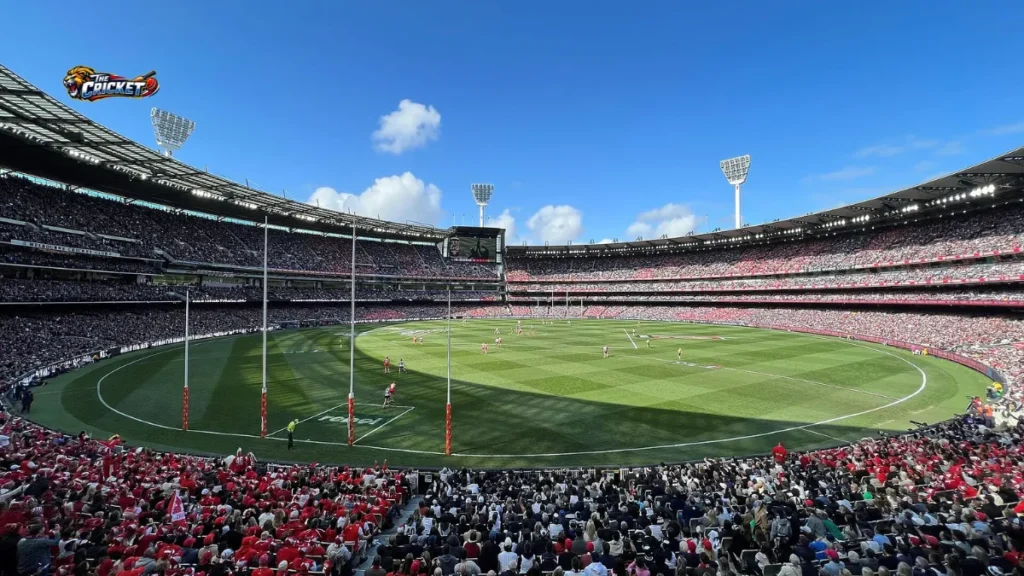
The Melbourne Cricket Ground, widely known as the MCG, stands as Australia’s most celebrated sporting venue and one of the most recognisable stadiums in the world. Situated just east of Melbourne’s central business district, this iconic arena has been the heartbeat of Australian sport for more than 170 years. From historic cricket milestones to unforgettable Australian Rules Football grand finals and even the Olympic Games, the ground has consistently delivered moments that define generations.
Affectionately called “The ’G” by locals, the stadium is more than a venue-it is a symbol of national identity, pride, and sporting excellence. With a rich heritage dating back to 1853 and a modern capacity of around 90,000 to 100,000 spectators depending on configuration, the Melbourne Cricket Ground blends tradition with cutting-edge facilities. It remains home to Australian cricket, Victorian cricket, and the biggest events in Australian Rules Football.
This in-depth guide explores the history, design, sporting legacy, pitch conditions, major events, economic impact, visitor information, and cultural significance of the Melbourne Cricket Ground-providing a complete and authoritative overview for readers in Australia, the UK, the US, and beyond.
Key Facts About Melbourne Cricket Ground
| Feature | Details |
|---|---|
| Also Known As | MCG, “The ’G” |
| Established | 1853 |
| Location | Yarra Park, Melbourne, Victoria, Australia |
| Capacity | Approximately 90,000+ |
| Playing Area Dimensions | 172.9 metres long, 147.8 metres wide |
| End Names | Members End, Great Southern Stand End |
| Floodlights Installed | March 1985 |
| Home Teams | Australia (Cricket), Victoria |
| Other Sports Hosted | Australian Rules Football, Soccer, Rugby Union, Rugby League, Lawn Bowls, Squash |
| Pitch Type | Natural Grass |
| Major Historic Event | 1956 Olympic Games |
| Current Local Time (as referenced) | 05:13, Tue Feb 24, 2026 |
A Historic Beginning: Established in 1853
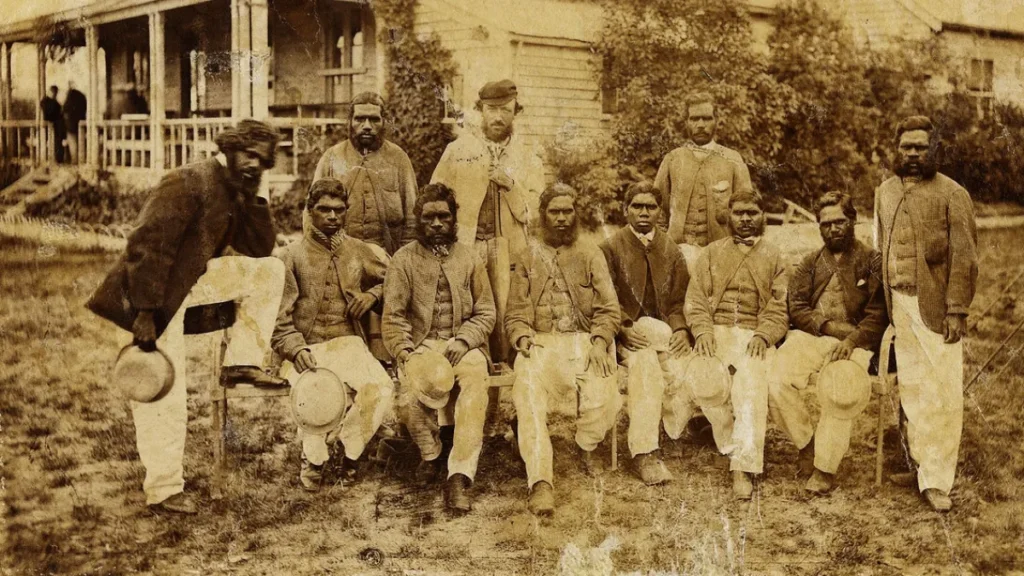
The Melbourne Cricket Ground was established in 1853, only two decades after Melbourne itself was founded. Originally created as a modest cricket field, the ground quickly evolved into the centre of organised sport in Victoria.
In 1877, the MCG became the birthplace of Test cricket when Australia and England contested the first-ever official Test match. That single event cemented the venue’s place in global sporting history. Nearly a century later, in 1971, it again made history by hosting the world’s first One Day International match — also between Australia and England.
Few stadiums in the world can claim to have launched two international cricket formats.
Evolution of Capacity and Stadium Design
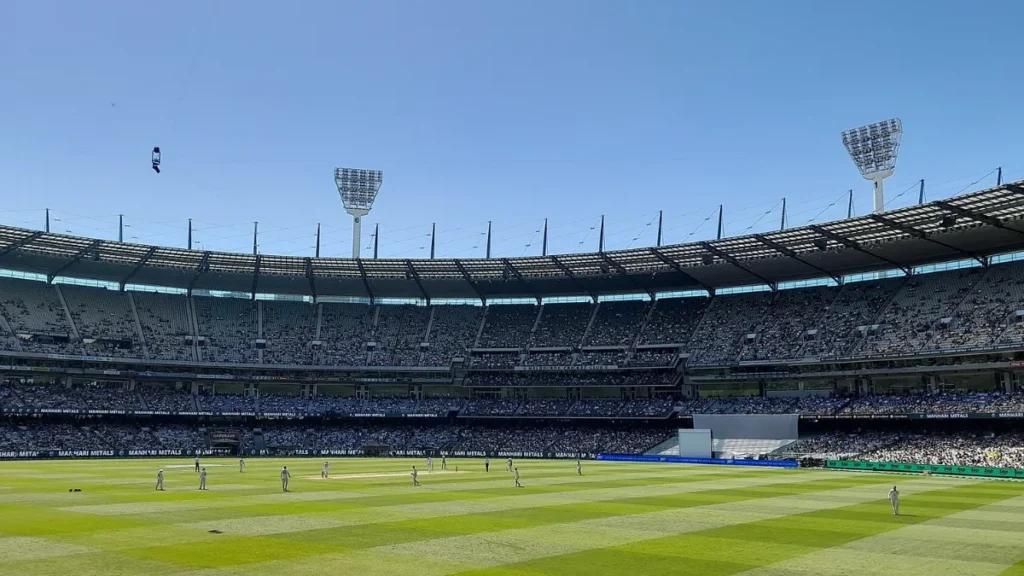
In its earlier decades, the Melbourne Cricket Ground featured vast standing areas and temporary seating. By the mid-20th century, the venue could accommodate crowds exceeding 120,000 spectators, particularly during major Australian Rules Football finals.
However, safety standards and spectator comfort requirements led to significant redevelopment projects in the 1980s and 1990s. The introduction of individual seating across nearly all sections reduced overall capacity but significantly improved the viewing experience.
Major Stands at the Melbourne Cricket Ground
| Stand | Key Features | Approximate Capacity |
|---|---|---|
| Great Southern Stand | Three-tier structure completed in 1992 | Nearly 50,000 |
| Ponsford Stand | Modern facilities, premium seating | Significant portion of total |
| Olympic Stand | Rebuilt for major international events | Large multi-tier seating |
| Members’ Reserve | Historic area with Long Room access | Exclusive membership seating |
The Great Southern Stand is particularly impressive, forming a massive three-tiered structure along one half of the ground’s perimeter. Combined with corporate suites, media facilities, and hospitality areas, the MCG offers world-class infrastructure.
Location and Accessibility
The Melbourne Cricket Ground is located in Yarra Park, a short walk from Melbourne’s central business district. Its strategic location makes it highly accessible:
- Jolimont Station is adjacent to the stadium.
- Richmond Station is within walking distance.
- Multiple tram routes connect directly to the venue.
- Pedestrian access from the CBD is common, particularly for evening matches.
It is not unusual to see office workers walking from the city after work to catch the second session of a day-night international.
Floodlights and Modern Technology
Floodlights were installed at the Melbourne Cricket Ground in March 1985, enabling day-night cricket and expanding scheduling possibilities. Today, the venue features advanced lighting systems, giant electronic scoreboards, high-definition replay screens, and comprehensive broadcasting facilities.
The ground also houses a Gallery of Sport and state-of-the-art corporate and media centres, making it one of the most technologically advanced sporting venues in the Southern Hemisphere.
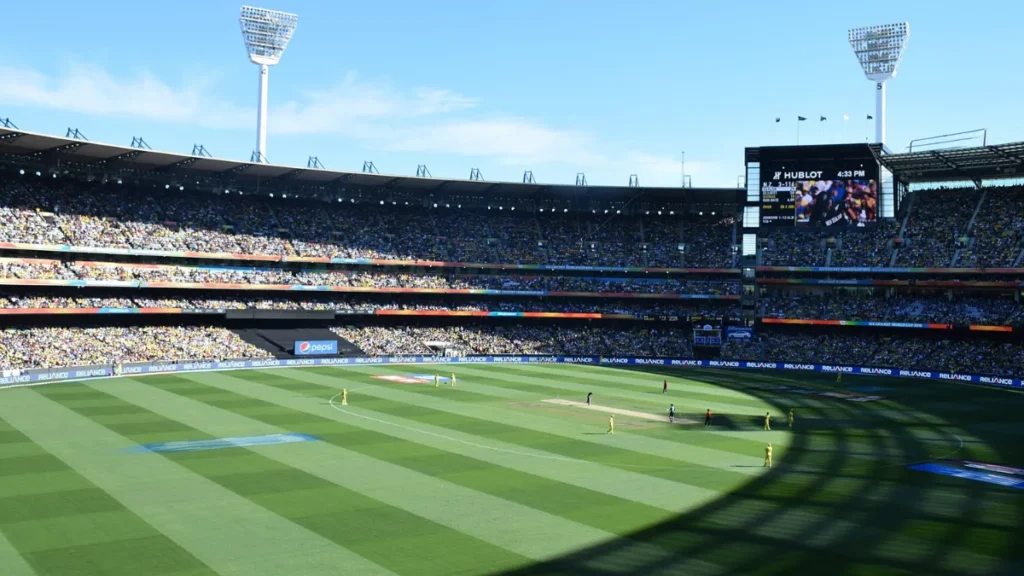
The Pitch: Balanced Contests Between Bat and Ball
The MCG pitch has historically offered balanced conditions. While certain curators faced criticism in the 1980s and early 1990s for producing low, wearing surfaces, the ground has generally delivered competitive cricket.
The natural grass surface typically provides:
- Early assistance for seam bowlers
- Consistent bounce for batsmen
- Spin support in later stages of longer matches
Many classic encounters at the Melbourne Cricket Ground have demonstrated this balance.
Notable Historic Cricket Matches at the MCG
| Season | Match | Significance |
|---|---|---|
| 1877 | Australia vs England | First Test match in history |
| 1971 | Australia vs England | First One Day International |
| 1982–83 | Australia vs England | Memorable Ashes Test |
| 1987–88 | Australia vs New Zealand | Thrilling Test decider |
| 1992 | Pakistan vs England | Cricket World Cup Final |
| 2015 | ICC Cricket World Cup Final | Australia crowned champions |
The Boxing Day Test Tradition
Each year on December 26, the Melbourne Cricket Ground hosts the Boxing Day Test-one of the most anticipated fixtures in the global cricket calendar. The event draws massive crowds and worldwide television audiences.
Legends such as Sir Donald Bradman, Shane Warne, Ricky Ponting, and Sachin Tendulkar have produced unforgettable performances on Boxing Day, reinforcing the MCG’s iconic status.
Australian Rules Football: The Spiritual Home
While cricket built its foundation, Australian Rules Football elevated the Melbourne Cricket Ground into a cultural institution. The AFL Grand Final, held annually at the MCG, is one of Australia’s biggest sporting events.
Crowds approaching or exceeding 100,000 create an electric atmosphere unmatched elsewhere in the country. For many Australians, attending an AFL Grand Final at the MCG is a lifelong dream.
The 1956 Olympic Games
In 1956, the Melbourne Cricket Ground became the centrepiece of the Olympic Games. It hosted the opening and closing ceremonies and multiple athletic competitions.
This global spotlight demonstrated Australia’s capability to host international mega-events and further enhanced the MCG’s prestige.
Other Sports Hosted
Although primarily associated with cricket and Australian Rules Football, the Melbourne Cricket Ground has also hosted:
- International soccer matches
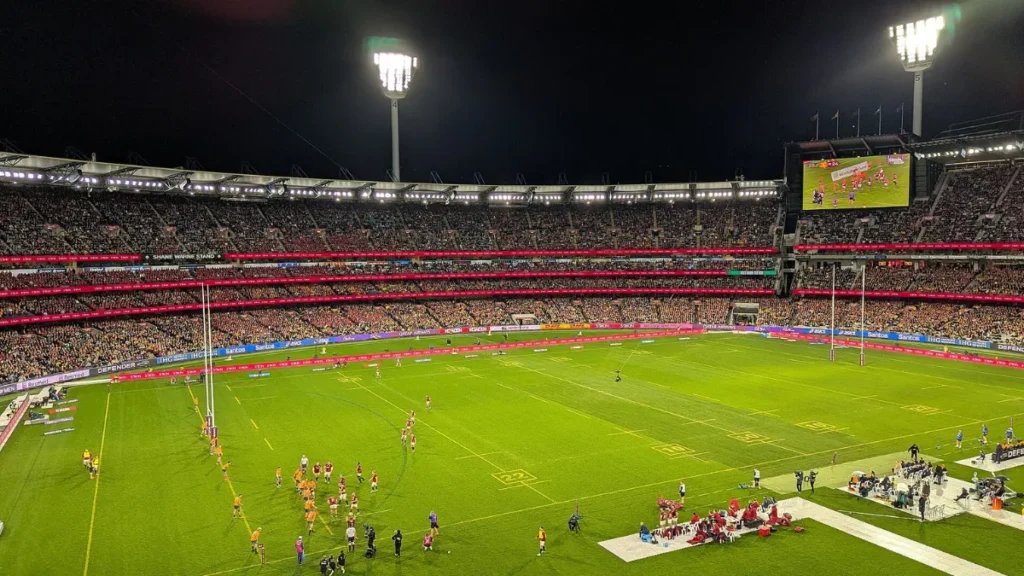
- Rugby Union fixtures
- Rugby League games
- Lawn bowls events
- Squash competitions
Its versatility has made it a multi-sport venue of global importance.
The National Sports Museum
Located within the stadium, the National Sports Museum celebrates Australia’s sporting achievements. Visitors can explore exhibits dedicated to cricket, AFL, Olympic history, and more.
Interactive displays, historic memorabilia, and behind-the-scenes tours-including access to players’ dressing rooms and the famous Long Room — provide a unique experience for tourists and sports enthusiasts.
Economic and Cultural Impact
The Melbourne Cricket Ground contributes significantly to Victoria’s economy. Major matches attract domestic and international visitors, benefiting:
- Hotels
- Restaurants
- Transport services
- Retail businesses
Culturally, the MCG serves as a unifying space. It is where communities gather to celebrate triumphs and endure heartbreaks together.
Stadium Dimensions and Playing Conditions
With playing dimensions measuring approximately 172.9 metres long and 147.8 metres wide, the Melbourne Cricket Ground is one of the largest cricket grounds globally. Its expansive outfield influences strategy, particularly in limited-overs formats.
Large boundaries often reward powerful hitters but also challenge batsmen to run aggressively between wickets.
A Venue That Continues to Evolve
Despite its historic legacy, the Melbourne Cricket Ground continues to modernise. Recent upgrades focus on:
- Enhanced digital ticketing
- Sustainability initiatives
- Improved security
- Upgraded seating comfort
- Advanced broadcasting infrastructure
Authorities remain committed to preserving tradition while embracing innovation.
Why the Melbourne Cricket Ground Remains Iconic
Few sporting venues can match the Melbourne Cricket Ground’s combination of history, capacity, atmosphere, and global recognition. It is:
- The birthplace of Test cricket
- The site of the first ODI
- Host of World Cup finals
- Home of the AFL Grand Final
- Centrepiece of the 1956 Olympics
For fans from Australia, the UK, the US, and across the cricketing world, the MCG represents more than sport-it represents legacy.
Visitor Information
Best time to visit:
- December–January for Boxing Day Test
- September for AFL Grand Final season
- Non-event days for guided tours
Facilities include:
- Food and beverage outlets
- Merchandise stores
- Accessible seating
- Premium hospitality suites
- Media centres
Advance booking is strongly recommended for major events.
Conclusion
The Melbourne Cricket Ground stands as a monumental symbol of sporting excellence. Since 1853, it has hosted legendary athletes, record-breaking performances, and moments etched permanently into sporting history.
From its early days as a simple cricket field to its current status as a world-class stadium with a capacity exceeding 90,000, the Melbourne Cricket Ground remains Australia’s premier sporting venue.
Whether you attend a Boxing Day Test, witness an AFL Grand Final, explore the National Sports Museum, or simply walk through Yarra Park and gaze at its towering stands, visiting the Melbourne Cricket Ground is an unforgettable experience.
It is not merely a stadium-it is the beating heart of Australian sport.