The phrase South Africa vs Zimbabwe may not immediately evoke the political tension that surrounds some cricket rivalries elsewhere in the world. Instead, it tells a different story-one built on shared history, competitive respect, and a uniquely African bond that stretches beyond the boundary rope.
As the two nations prepare to face each other in Delhi during the T20 World Cup, the match carries far more meaning than points on a table. It represents progress, redemption, and a celebration of how far African cricket has come. While geopolitics have complicated cricket relationships in other regions, Africa offers a refreshing contrast-a reminder that sport can strengthen ties rather than strain them.
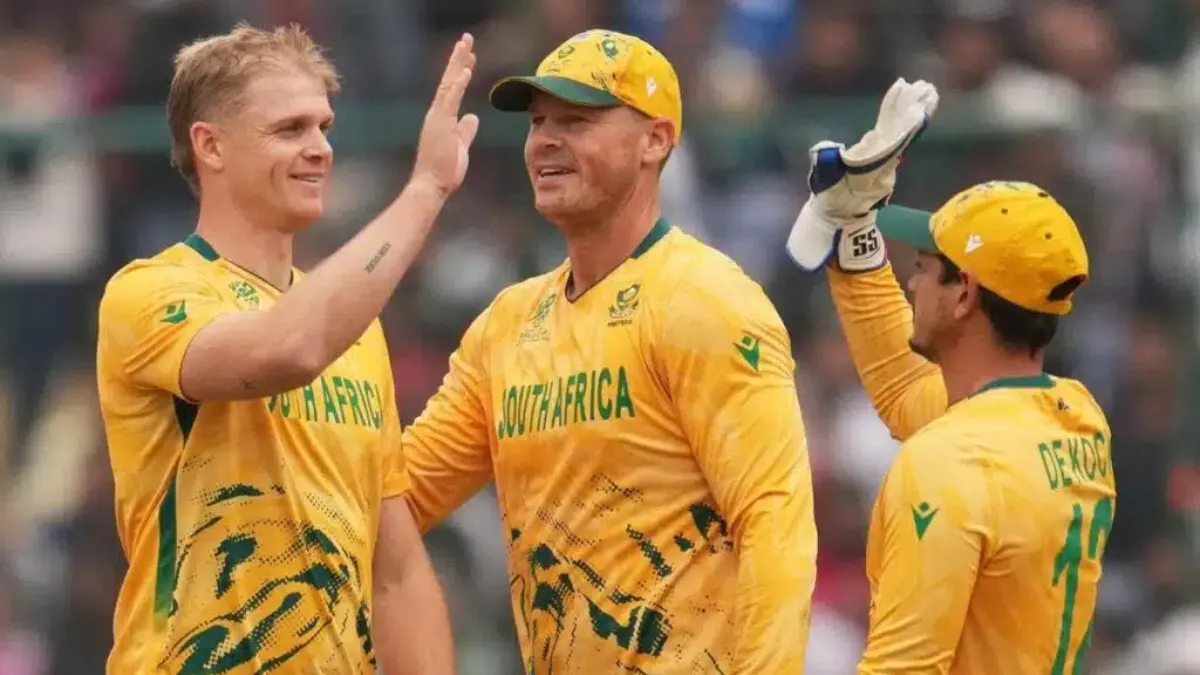
Both teams arrive in India having achieved something significant. South Africa are already through to the semi-finals, poised to top their group. Zimbabwe, though out of contention for the title, have delivered their best-ever T20 World Cup performance and secured direct qualification for the next edition. The mood surrounding this clash is light, celebratory, and full of mutual admiration.
A Tournament Without Tension
Unlike other high-stakes encounters happening elsewhere in India — such as India’s crucial clash with West Indies in Kolkata — the South Africa vs Zimbabwe fixture carries no qualification anxiety. Instead, it feels like a reunion.
The camaraderie between the two sides has been evident throughout the tournament. Zimbabwe head coach Justin Sammons, formerly South Africa’s batting coach, shares strong connections with several members of the Proteas camp. Informal coffee meetings and shared stories have been common during the competition, reflecting a relationship that extends well beyond competitive rivalry.
The two cricket boards have also collaborated closely in recent years. Zimbabwe played a crucial role in helping South Africa prepare for the World Test Championship final. In June, Zimbabwe extended their stay in England to face South Africa in a tour match at Arundel. Though the most dramatic moment saw Kagiso Rabada injure Ben Curran with a delivery that broke his hand, there was no lasting bitterness. Curran returned to action, and the spirit between the sides remained intact.
Such episodes reinforce the understanding that while matches are fiercely contested, respect remains paramount.
South Africa’s Dominance and Zimbabwe’s Progress
The journeys of these two nations have been markedly different over the years. South Africa have long been regarded as one of the powerhouses of international cricket, while Zimbabwe have battled financial struggles, administrative turmoil, and competitive setbacks.
Yet, this T20 World Cup tells a compelling story of both sides moving forward.
South Africa’s campaign has been clinical and commanding. Zimbabwe, meanwhile, have achieved their highest-ever finish in the tournament’s history, ensuring automatic qualification for the next edition and avoiding the uncertainty of qualifiers.
T20 World Cup 2026 Snapshot
| Team | Group Position | Semi-Final Status | Qualification for Next T20 WC |
|---|---|---|---|
| South Africa | 1st (Likely) | Qualified | Automatic |
| Zimbabwe | Eliminated | No | Automatic |
While the table reflects different outcomes, it does not capture the deeper narrative of shared growth and African cricket’s rising influence.
Historic Encounters and Memorable Moments
Although South Africa have generally dominated head-to-head contests, Zimbabwe’s most famous victory remains etched in cricket folklore — their stunning win over South Africa at the 1999 ODI World Cup. That single result had dramatic implications, contributing to South Africa missing out on the final.
Since then, encounters have been less frequent. For years, the two sides barely played each other, partly due to scheduling priorities and partly due to financial realities within African cricket structures.
Recently, however, the relationship has warmed significantly.
South Africa toured Zimbabwe shortly after lifting the World Test Championship mace. That series marked the first Test matches between the two nations in 11 years. Though Zimbabwe were comprehensively outplayed, hosting the world champions was a landmark moment.
One of the most talked-about episodes came when Wiaan Mulder retired unbeaten on 367, choosing not to surpass Brian Lara’s iconic Test record. The gesture was widely viewed as an act of respect — not just for Lara, but for the spirit of the game and for Zimbabwe as hosts. South Africa had already posted an imposing total; there was no need to deepen the humiliation.
Moments like these define the tone of South Africa vs Zimbabwe — competitive but considerate.
Fans, Friendship and Shared Support
Perhaps the clearest sign of goodwill came during a T20I series where Zimbabwe’s passionate supporters, known as Castle Corner, were seen cheering for South Africa after Zimbabwe’s elimination. It was an extraordinary display of continental solidarity.
The relationship is further strengthened by future collaboration. South Africa and Zimbabwe are two of the three co-hosts of the 2027 ODI World Cup, alongside Namibia. That partnership alone requires planning, trust, and shared ambition.
There are also discussions — though still informal — about expanding African cricket through continental T20 tournaments and potential tri-series events. One rumoured ODI tri-series could see South Africa and Namibia travel to Zimbabwe to inaugurate a new stadium in Victoria Falls.
Such developments suggest African cricket is entering a new chapter.
Beyond Cricket: A Complex Social Reality
While cricketing ties remain strong, broader social realities paint a more complicated picture.
South Africa continues to grapple with episodes of xenophobia directed at migrants from other African nations — a phenomenon often referred to as Afrophobia. Zimbabweans, who form the largest expatriate community in South Africa and contribute significantly to sectors such as hospitality and domestic services, have at times been targeted in violent attacks.
This contradiction is stark. Zimbabwe played a crucial role in supporting South Africa during the anti-Apartheid struggle, offering refuge and solidarity in the fight for freedom. That historical debt remains deeply embedded in regional memory.
Yet sport offers a powerful counter-narrative — a space where unity, not division, dominates.
Football Diplomacy: Shared Grounds and Shared Goals
The cooperation between the two nations extends into football. Because Zimbabwe currently lacks FIFA-approved stadiums, their national team plays home fixtures in South Africa, benefiting from world-class facilities.
When the two nations were drawn into the same qualification group for the FIFA World Cup, the arrangement created an unusual scenario. South Africa won the first meeting 3-1. In the return fixture — technically Zimbabwe’s “home” game in Durban — Zimbabwe held South Africa to a goalless draw.
Though it briefly delayed South Africa’s qualification, the result did little damage. It was another example of how rivalry and mutual dependence coexist.
Zimbabwe’s Resilience and Redemption
Zimbabwe’s recent T20 World Cup qualification for 2028 marks a turning point. For nearly a decade, they carried the emotional and financial burden of narrowly missing major tournaments.
Their failure to qualify for the 2019 ODI World Cup led to the dismissal of the coaching staff led by Heath Streak. Streak later faced a ban for breaching anti-corruption regulations and tragically passed away in 2023 after battling cancer.
His absence remains deeply felt within Zimbabwean cricket circles. Many believe he would have taken pride in witnessing the team’s resurgence.
Brendan Taylor’s redemption story also resonates strongly. After serving his own suspension, his return symbolises second chances and accountability within the sport.
Zimbabwe’s new generation of fast bowlers further signals a brighter future.
Zimbabwe’s Major Tournament Qualification Timeline
| Year | Tournament | Qualification Outcome |
|---|---|---|
| 2019 | ODI World Cup | Failed to Qualify |
| 2023 | ODI World Cup | Failed to Qualify |
| 2024 | T20 World Cup | Missed Out |
| 2026 | T20 World Cup | Best-Ever Finish |
| 2028 | T20 World Cup | Qualified Automatically |
The numbers reveal a journey defined by near misses and hard-earned redemption.
South Africa’s Golden Sporting Era
If Zimbabwe’s story is one of resilience, South Africa’s is one of sustained excellence across sporting codes.
The nation has enjoyed remarkable success in recent years, most notably in rugby, where the Springboks have claimed four Rugby World Cup titles. That achievement has unified a country historically divided by race, class and politics.
Sport in South Africa has become a powerful tool of national cohesion. From cricket to rugby to athletics, victories have transcended traditional social divides.
The current success of the Proteas in this T20 World Cup is another chapter in that broader narrative.
Co-Hosting the Future: The 2027 ODI World Cup
Looking ahead, the co-hosting of the 2027 ODI World Cup represents a milestone moment for African cricket. South Africa, Zimbabwe and Namibia will jointly stage the tournament — a symbolic and practical demonstration of continental collaboration.
For Zimbabwe, it presents a chance to showcase facilities, attract investment, and inspire a new generation of players. For South Africa, it reinforces their leadership role in African sport.
The South Africa vs Zimbabwe fixture in Delhi thus becomes more than a group-stage encounter. It becomes a preview of a partnership that will define the next phase of African cricket.
Head-to-Head Overview
| Format | Matches Played | South Africa Wins | Zimbabwe Wins |
|---|---|---|---|
| Tests | 10+ | Dominant | Rare |
| ODIs | 60+ | Majority | Notable 1999 WC Win |
| T20Is | 15+ | Majority | Few |
While South Africa’s superiority is evident statistically, Zimbabwe’s presence in elite tournaments underscores their progress.
Also read: Pakistan vs Sri Lanka: Sri Lanka Win Toss and Opt to Field in T20 World Cup 2026 Super 8 Clash
This Time for Africa
The slogan “This Time for Africa” famously echoed during the 2010 FIFA World Cup hosted by South Africa. Today, it resonates again — not in a football stadium, but on a cricket field in Delhi.
The spirit of South Africa vs Zimbabwe is not defined by hostility. It is shaped by shared ambition, continental pride, and a recognition that African cricket thrives when its nations support one another.
As both teams walk onto the field, they carry with them stories of struggle and triumph — stories of freedom movements, financial challenges, social complexities and sporting glory.
Zimbabwe bring gratitude for resilience and renewed hope. South Africa bring confidence forged through excellence and unity.
Together, they bring Africa to the world stage.
And this time, it truly feels like Africa’s moment.