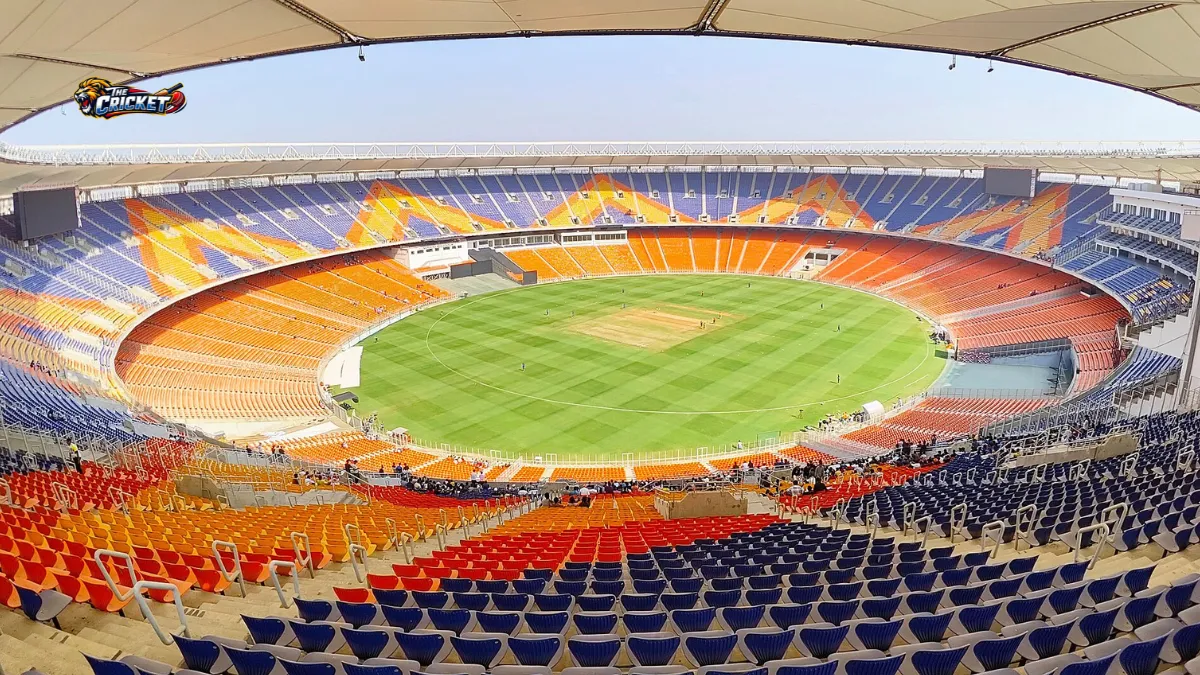
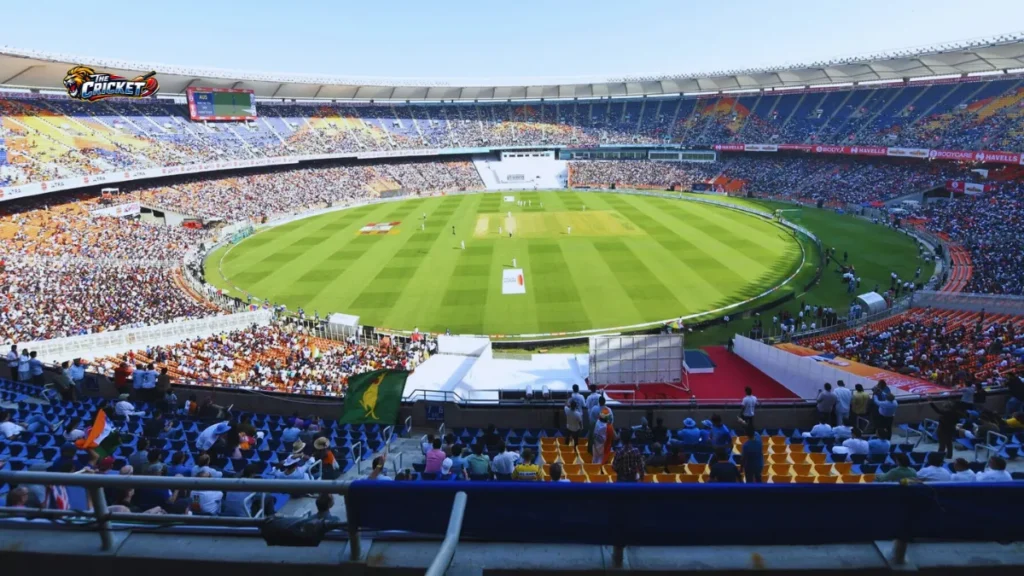
The Narendra Modi Stadium Pitch Report has become one of the most searched and discussed topics in world cricket, especially with the venue hosting some of the biggest international matches and IPL clashes. Situated in Ahmedabad, this stadium is not just a cricket ground—it is a symbol of modern sporting infrastructure and the largest cricket stadium in the world by seating capacity.
Over the decades, the venue has evolved dramatically, offering a variety of pitch behaviors that keep players, analysts, and fans constantly guessing. From high-scoring thrillers to spin-dominated contests, the pitch here has showcased every shade of cricket.
Stadium Overview: Infrastructure and Key Facts
Before diving deep into the Narendra Modi Stadium Pitch Report, understanding the venue’s background provides valuable context.
Previously known as the Sardar Patel Stadium and widely referred to as Motera Stadium due to its location, the ground underwent a complete transformation and reopened in 2020 as a world-class facility.
Stadium Profile
| Detail | Information |
|---|---|
| Official Name | Narendra Modi Stadium |
| Former Names | Gujarat Stadium, Sardar Patel Stadium |
| Established | 1982 (Rebuilt in 2020) |
| Seating Capacity | 132,000 |
| Location | Ahmedabad, Gujarat, India |
| Ends | Adani Pavilion End, Jio End |
| Floodlights | Yes |
| Home Team | Gujarat (Domestic & IPL) |
| Curator | Bagira Thakur |
Built along the scenic banks of the Sabarmati River, the stadium combines scale with sophistication. The redevelopment brought in cutting-edge facilities, improved pitch systems, and enhanced spectator experience, making it a global cricketing hub.
Historic Moments That Defined the Venue
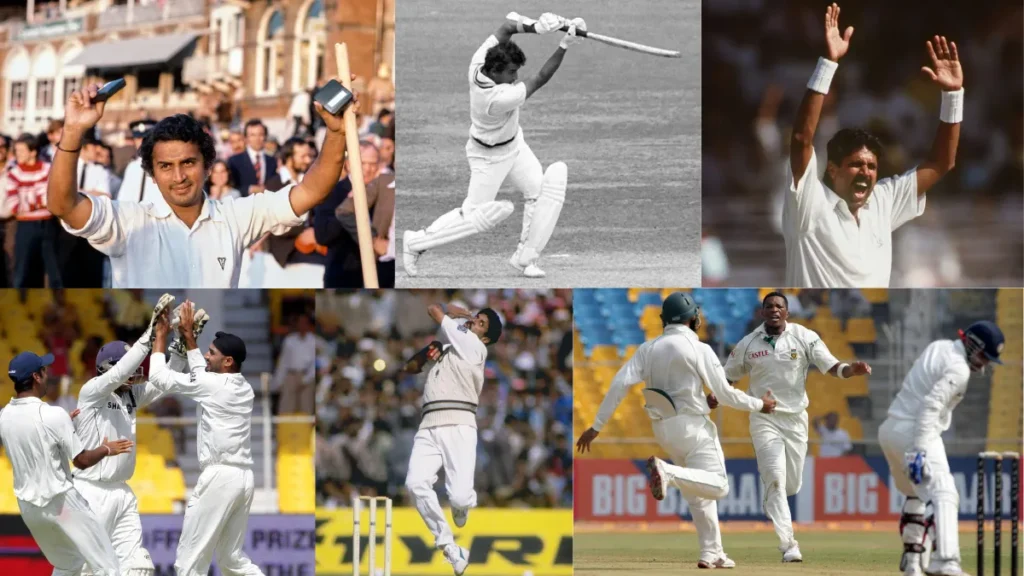
The stadium has witnessed several unforgettable milestones:
- Sunil Gavaskar became the first player in Test cricket history to reach 10,000 runs here during the 1986–87 series.
- Kapil Dev broke Richard Hadlee’s record of 431 Test wickets in 1994 at this venue.
- In 2008, South Africa bowled India out for just 76 in a Test match, finishing the game in under three days.
These contrasting results highlight how unpredictable and dynamic the surface has been across different eras.
Narendra Modi Stadium Pitch Report: Understanding the Surface
At the core of the Narendra Modi Stadium Pitch Report lies a unique factor—the presence of both red soil and black soil pitches. This dual-soil system is what makes the venue strategically fascinating.
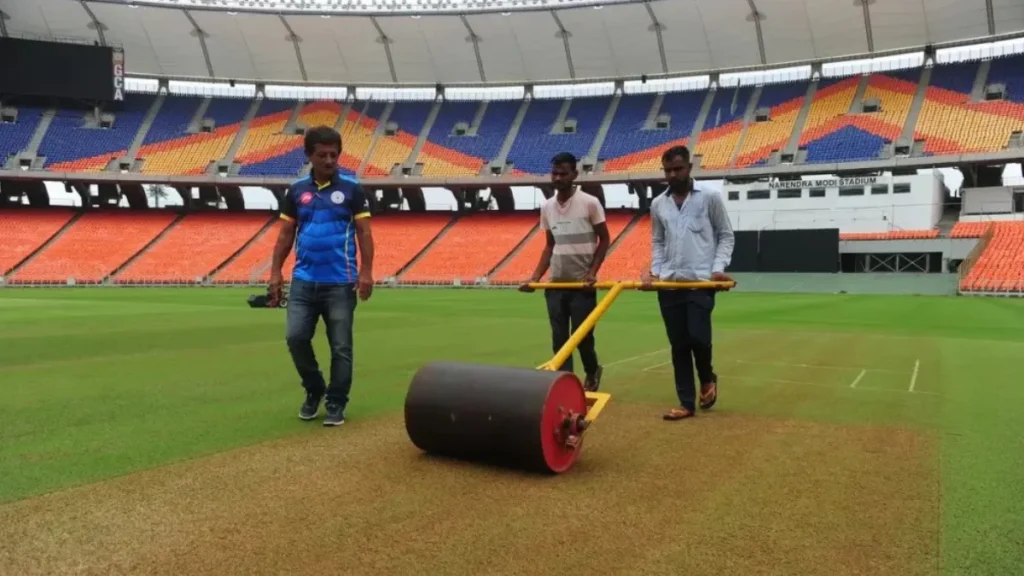
Red Soil Pitch Characteristics
- Offers consistent bounce and carry
- Assists fast bowlers early
- Ideal for stroke play
- Produces faster outfield conditions
Red soil pitches are generally batter-friendly once the initial movement fades. In limited-overs cricket, these surfaces often lead to high-scoring games.
Black Soil Pitch Characteristics
- Slower and more abrasive surface
- Ball grips and turns more
- Supports spinners significantly
- Deteriorates quicker in Tests
On black soil, matches tend to slow down, especially in T20 middle overs. In Test cricket, cracks start appearing from Day 3, making batting increasingly difficult.
Understanding which surface is in use is crucial for match predictions and fantasy cricket strategies.

Batting Conditions at Narendra Modi Stadium
The Narendra Modi Stadium Pitch Report often describes batting conditions as balanced but highly dependent on pitch preparation.

White-Ball Cricket (T20 & ODI)
- True bounce allows free stroke play
- Fast outfield accelerates scoring
- Shorter straight boundaries favor power hitters
- Early overs may offer slight seam movement
In T20s, first-innings scores typically range between 170 and 200, while in ODIs, totals above 280 are considered competitive.
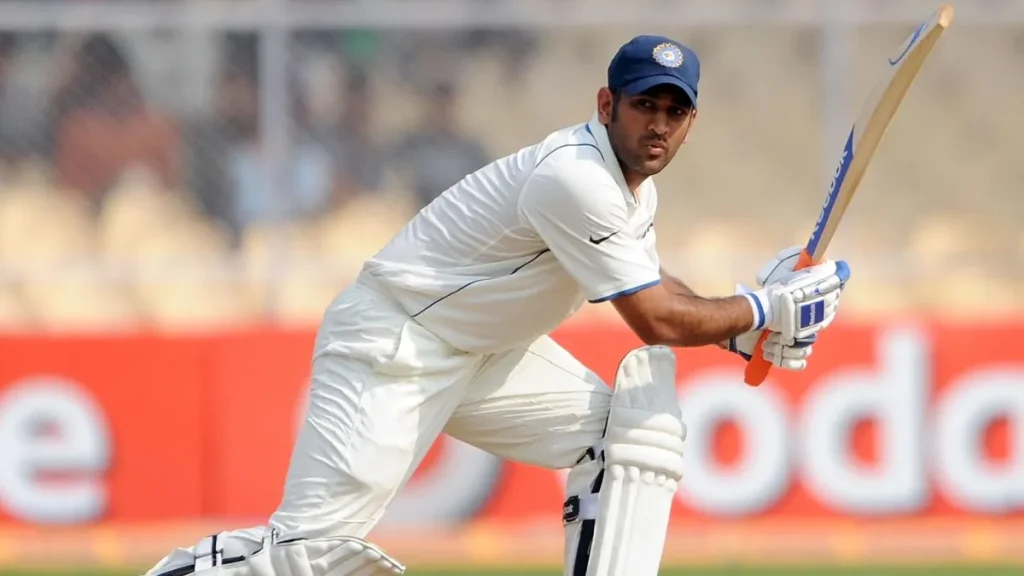
Test Matches
- First two days favor batters
- Surface slows down gradually
- Spin becomes dominant from Day 3
- Technique against turn becomes crucial
Batters who can adapt to changing bounce and pace tend to succeed here.
Bowling Conditions: Pace vs Spin Battle
The Narendra Modi Stadium Pitch Report consistently emphasizes a balance between pace and spin, depending on conditions.
Fast Bowlers
- Get early movement with the new ball
- Benefit from bounce on red soil
- Effective under lights due to dew
- Hard lengths and short balls work well
Spin Bowlers
- Key players on black soil pitches
- Dominate middle overs in white-ball formats
- Crucial from Day 3 in Tests
Quality spinners often decide matches, especially in longer formats.
Toss Factor: What Should Teams Choose?
The toss plays a critical role, particularly in limited-overs cricket.
Toss Decision Table
| Match Format | Preferred Decision |
|---|---|
| T20 | Bowl First |
| ODI | Bowl First |
| Test | Bat First |
Dew is a major factor in night games, making chasing easier as the ball skids onto the bat.

Format-Wise Narendra Modi Stadium Pitch Report
T20 Matches
| Aspect | Observation |
|---|---|
| Average Score | 160–180 |
| High Scores | 200+ possible |
| Key Bowlers | Spinners & death specialists |
| Toss Impact | High |
Powerplay overs are crucial, as batters take advantage of the hard ball.
ODI Matches
| Aspect | Observation |
|---|---|
| Average Score | 260–300 |
| Batting | Easier after 10 overs |
| Middle Overs | Spin plays key role |
| Death Overs | Pacers with variations succeed |
Teams usually aim for 280+ to stay competitive.
Test Matches
| Day | Pitch Behavior |
|---|---|
| Day 1 | Balanced |
| Day 2 | Batting-friendly |
| Day 3 | Spin begins |
| Day 4–5 | Cracks and uneven bounce |
Batting first remains the safest option in Tests.
Weather Impact on Pitch Behavior

Ahmedabad’s climate plays a huge role in shaping the Narendra Modi Stadium Pitch Report.
Summer Conditions
- High temperatures dry the pitch
- Surface becomes slower over time
- Assists spinners later
Winter Conditions
- Cooler evenings
- Heavy dew in night matches
- Ball skids, favoring batters
Humidity and temperature shifts can significantly influence grip and bounce.
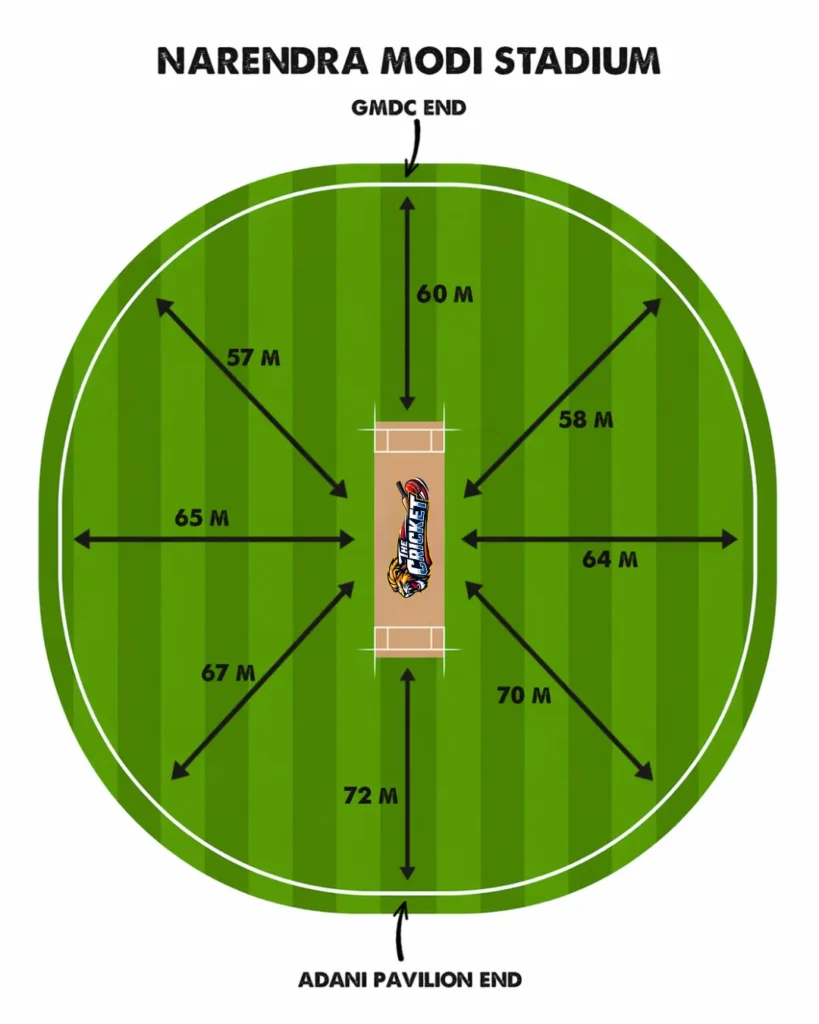
Boundary Dimensions and Outfield Impact
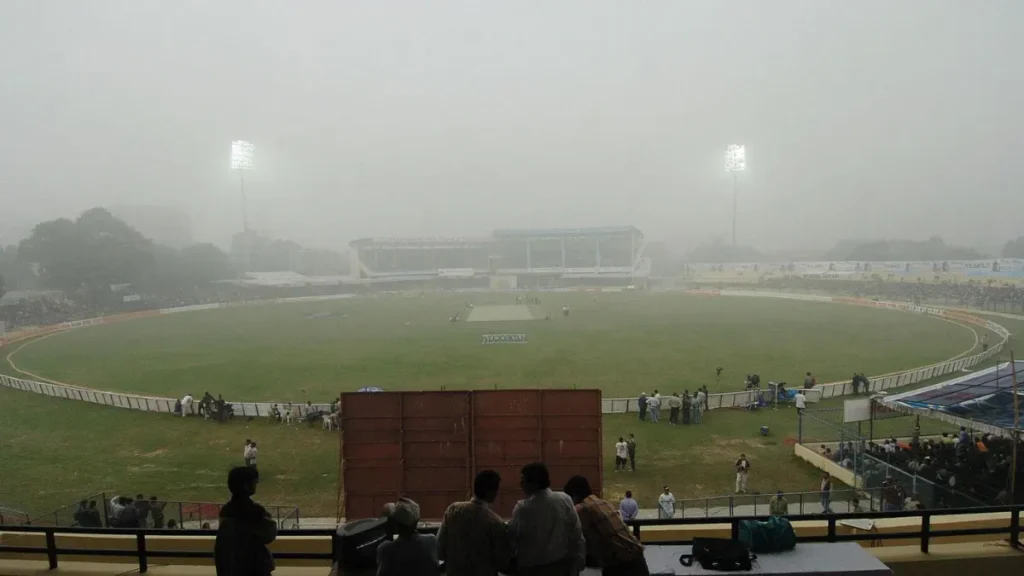
The stadium features:
- Larger square boundaries
- Shorter straight boundaries
- Extremely fast outfield
This combination encourages straight hitting while still giving bowlers opportunities through mistimed shots.
Average Scores at Narendra Modi Stadium
| Format | Competitive Score |
|---|---|
| T20 | 170+ |
| ODI | 280+ |
| Test (1st Innings) | 350+ |
These numbers vary depending on pitch preparation and match conditions.
Fantasy Cricket Strategy Based on Narendra Modi Stadium Pitch Report
For fantasy cricket players, understanding pitch conditions is crucial.
On Batting-Friendly Surfaces
- Pick top-order batters
- Include power hitters
- Choose pacers for powerplay wickets
On Slower Surfaces
- Focus on quality spinners
- Select middle-order anchors
- Prefer bowlers with variations
Dew factor should always be considered for night matches.
Recent Match Trends
Recent games at the venue indicate:
- Slight advantage for chasing teams
- Balanced contests across formats
- Increasing role of spin
- Variable pitch preparation depending on match type
The ground staff prepares surfaces strategically, ensuring variety and competitiveness.
Strengths and Challenges of the Surface
Strengths
- Balanced wicket
- Consistent bounce
- High-quality maintenance
- Fair contest between bat and ball
Challenges
- Dew can heavily favor chasing teams
- Dry conditions may create uneven bounce
- Large boundaries demand fitness and precision
Why the Narendra Modi Stadium Pitch Report Matters Globally

The Narendra Modi Stadium Pitch Report is not just relevant for Indian fans—it is closely followed worldwide, especially in countries like the UK and the USA.
With global tournaments, IPL matches, and high-profile fixtures taking place here, analysts, broadcasters, fantasy players, and cricket enthusiasts rely heavily on pitch insights to predict match outcomes.
Also read: Pallekele International Cricket Stadium Photos: A Complete Guide with Photos, Records and Key Facts
Conclusion
The Narendra Modi Stadium Pitch Report highlights a venue that offers diversity rather than predictability. The presence of both red and black soil pitches ensures that no two matches feel the same.
Batters enjoy true bounce and fast outfields, while bowlers—especially spinners—find opportunities as the game progresses. In limited-overs cricket, dew often becomes the deciding factor, making toss decisions crucial.
From historic achievements to modern-day thrillers, this iconic stadium in Ahmedabad continues to deliver unforgettable cricket moments. As one of the most advanced and largest cricket venues in the world, understanding its pitch behavior remains essential for decoding every match played here.